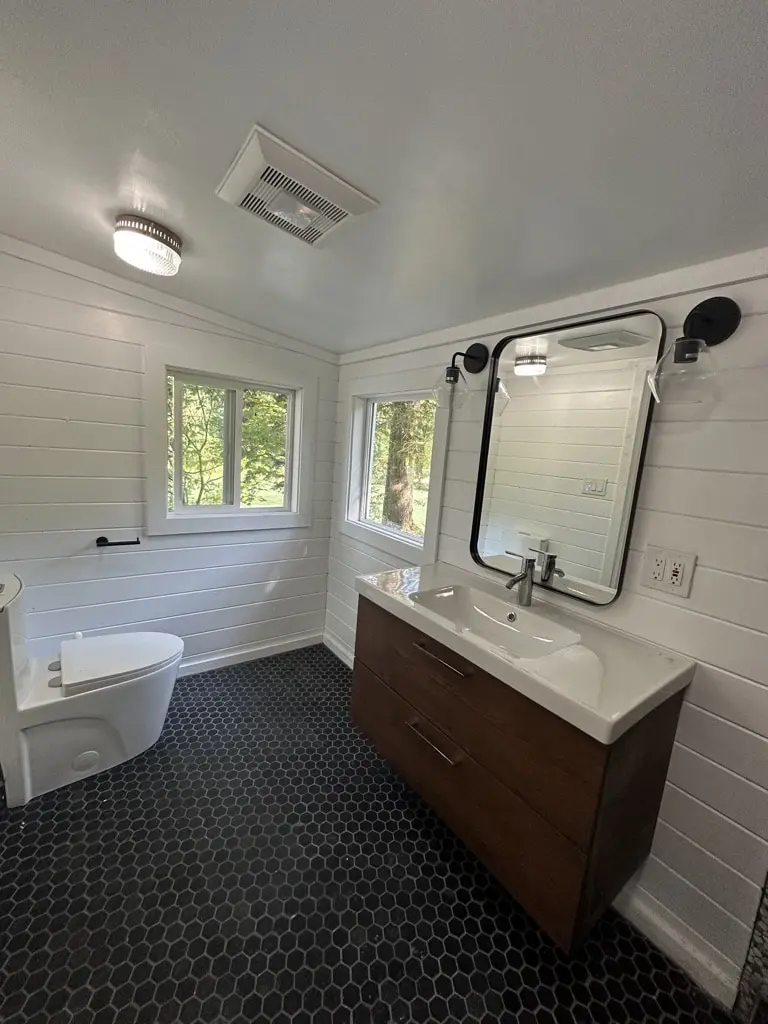
Bathroom walls, Greater Seattle Area
Can You Use Peel and Stick Wallpaper in a Bathroom?
Peel and stick wallpaper works in a bathroom only on walls that stay dry: a powder room, or walls away from the shower and tub with a working fan. It fails inside a shower or above a tub with a shower head, where the code requires a nonabsorbent surface 6 feet up and steam lifts the adhesive.
Peel and stick is a do it yourself product. Below is where it holds, where it fails, the code behind it, and the paint, tile and paneling we build instead. For a bathroom that needs more than new walls, Book a Consultation.
Where does peel and stick wallpaper work in a bathroom?
It works where water never touches it and steam clears fast. A powder room has a toilet and a sink but no shower, so it is the safest bathroom for peel and stick. In a full bathroom, the safest walls are the ones farthest from the shower: behind the toilet, beside the door, or an accent wall above the vanity, clear of sink splash.
One maker sets three conditions. North and Finch says in its Wallpaper FAQ (read October 2026) that its peel and stick paper cannot be in "direct and consistent contact with water (inside a shower cabinet, right next to a bath, etc.)", must go on a dry and clean wall, and "will not work in bathrooms with poor ventilation and extreme humidity."
Rolls cover a wall with fewer seams. Peel and stick tiles suit a small panel above a vanity. Either way, every seam is an edge that steam can lift.
| Bathroom zone | Peel and stick? | What we build there instead |
|---|---|---|
| Powder room walls (toilet and sink, no shower) | Usually holds, with a fan | Paint, or a tile or panel accent wall |
| Full bath walls away from the shower and tub | Can hold, if the fan clears the steam | Paint in a sheen that suits the room, wainscot, shiplap |
| Directly behind the sink | Avoid: splash wets the seams | Tile backsplash |
| Wall right next to a tub | Not recommended by the maker quoted above | Tile wainscot |
| Shower walls, and tub walls under a shower head | No: code requires a nonabsorbent surface 6 feet up | Waterproofing, then tile or wall panels |
Code: 2021 Seattle Residential Code R307.2. Maker guidance: North and Finch Wallpaper FAQ, read October 2026.
Can waterproof or vinyl peel and stick wallpaper go in a shower or tub surround?
No. A waterproof or vinyl label does not change the rule for the wet zone. The adhesive cannot hold under running water, and North and Finch rules out "direct and consistent contact with water" for its paper. Section R307.2 of the 2021 Seattle Residential Code (page 3-44) says: "Bathtub and shower floors and walls above bathtubs with installed shower heads and in shower compartments shall be finished with a nonabsorbent surface. Such wall surfaces shall extend to a height of not less than 6 feet (1829 mm) above the floor." Washington does not change that section, so it applies statewide.
Water also hides behind the paper. The EPA lists the back side of wallpaper as a place where mold can grow out of sight, in A Brief Guide to Mold, Moisture and Your Home (updated February 2026). Paint is not the answer inside a shower either. We build a waterproof layer first, then set tile, stone or panels on it. Our guide Shower Wall Finishes for a Bathroom Remodeling Project compares those finishes.
How much bathroom ventilation does peel and stick wallpaper need?
It needs the fan the code already requires, run every time someone showers. Washington's residential code says "Bathrooms, toilet rooms, and kitchens shall include a local exhaust system" (WAC 51-51-1505, section M1505.4.4.1, effective 2024). Our guide Bathroom Remodel Dos and Don'ts: Mistakes to Avoid gives the fan sizes the code sets. Section M1501.1 of the 2021 Seattle Residential Code (page 15-1) says the air "shall be discharged to the outdoors" and "shall not be exhausted into an attic, soffit, ridge vent or crawl space."
Humidity is the number to watch. The EPA advises keeping indoor humidity below 60 percent, ideally 30 to 50 percent, and running the bathroom fan or opening a window when showering (EPA mold guide, updated February 2026).
On a Redmond master bathroom we finished in 2023 to 2024, the ceiling was redone in new drywall with a new exhaust fan. That job cost about $65,000.
How do you prep and test a bathroom wall for peel and stick wallpaper?
Test a sample first. North and Finch suggests leaving a sample on the wall for 2 to 3 days to check that it holds (Wallpaper FAQ, read October 2026). For a bathroom, the Wallmur peel and stick installation guide (read October 2026) says to stick it more than 7 feet up and wait 7 to 14 days. If the corners lift, the room is too humid.
Then prep the wall:
- Wipe off dust, soap film and grease with a cloth and warm water, with no soap or chemicals (Wallmur guide), and let the wall dry fully.
- Fix mildew first. The EPA guide above says to clean mold off and dry the surface before painting, and the same goes for paper.
- Use a smooth, painted wall. North and Finch does not recommend its paper on highly textured walls.
- Let new paint cure. The Wallmur guide says not to paint the wall within 21 days before hanging.
After it is up, press down any edge that starts to lift, and keep the fan running after every shower.
What do we install in a bathroom instead of peel and stick wallpaper?
We build finishes that are meant to get wet or to last on bathroom walls. Away from the water, that is paint, a tile wainscot or wood paneling. In the wet zone, it is a waterproof layer under tile or wall panels. Our House Painters Across the Greater Seattle Area page gives each wall, ceiling and trim the sheen that suits the room.
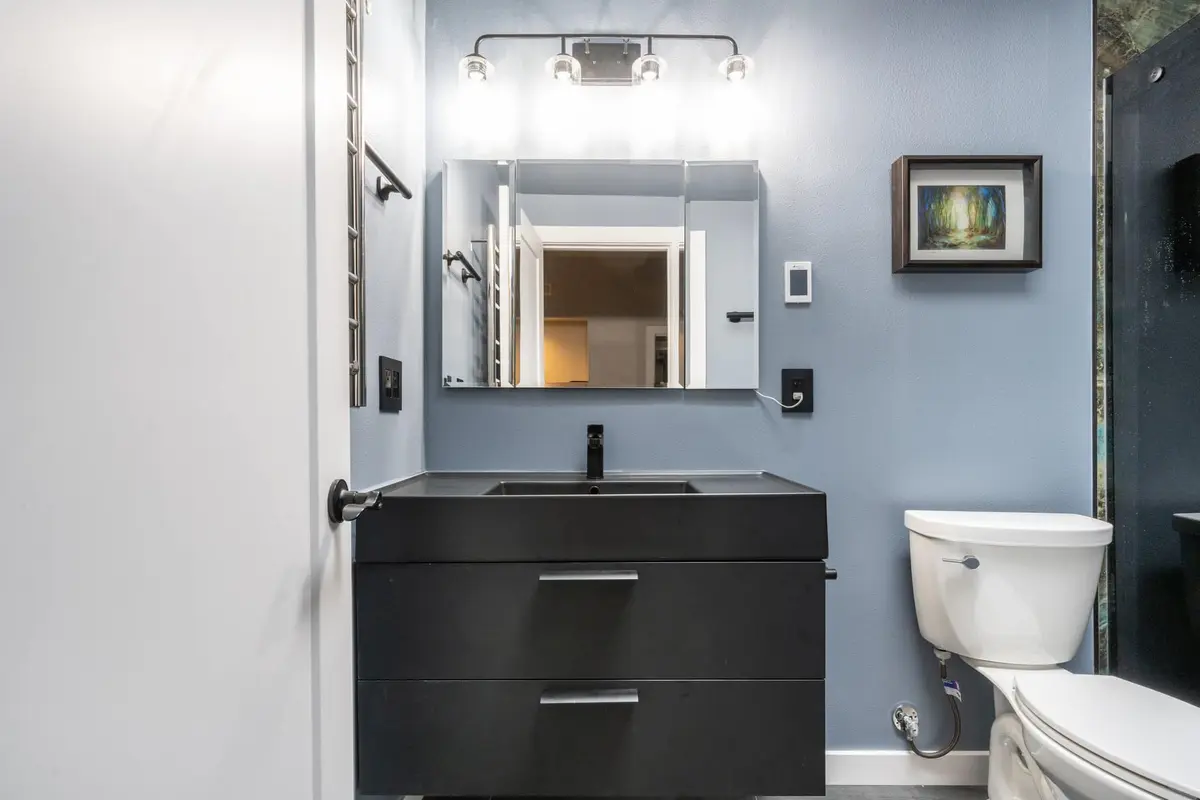
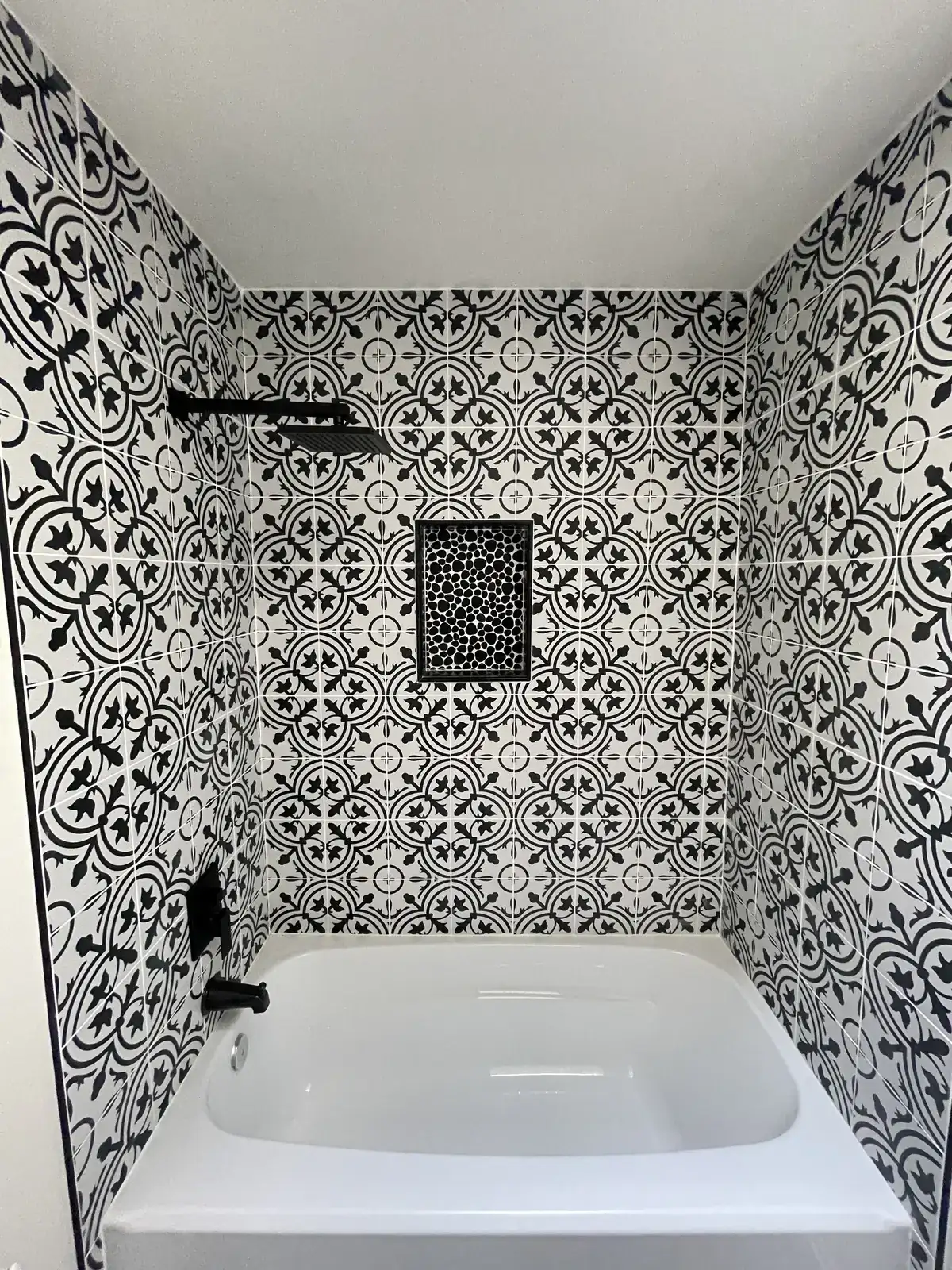
Our Everett bathroom from 2023 has blue gray painted walls outside a shower lined in stone-look panels. It cost about $30,000. In Gold Bar in 2023, we replaced knotty pine walls with white shiplap and a mosaic tile shower. That job cost about $35,000. An Issaquah tub alcove from 2021 got patterned tile on all three walls. It cost about $35,000.
| Finish | What it covers | Starting price |
|---|---|---|
| Paint, one to three rooms | Walls and ceilings away from the shower | $5,000+ |
| Small bath or powder room, Basic | New fan, light, floor, paint and trim | $25,000+ |
| Small bath, Mid-Range | Tiled tub or shower walls | $40,000+ |
| Small bath, Luxury | Patterned or large format tile | $60,000+ |
Starting prices from our painting page and Cost of a Bathroom Remodel in the Greater Seattle Area, updated October 2026. Each includes a standard material allowance; permit fees and damage found at demolition are priced in writing.
When should you remodel the bathroom instead of covering the walls?
When the wall is hiding a water problem. Loose tile, cracked grout, a soft spot by the tub or a stain on the ceiling below mean water is already behind the surface. New wallpaper or caulk will not stop it. The fix starts with opening the wall and rebuilding the waterproofing.
A fan that barely moves air is the other sign. A bigger or moved fan can mean new wiring and a new duct to the outside, and in Seattle, moving wiring can need its own electrical permit (R105.3). We file the permits your scope needs and book each inspection. See Bathroom Remodeling Across the Greater Seattle Area for how we run the work. We work across King and Snohomish counties, including Home Remodeling Contractors in Everett, WA.
Frequently Asked Questions
Can you put peel and stick wallpaper on a bathroom ceiling?
North and Finch says its peel and stick paper can go on a ceiling if the surface is smooth (Wallpaper FAQ, read October 2026). In a bathroom, steam rises and collects on the ceiling first, so the same fan and humidity limits apply there, and a lifting ceiling edge is harder to reach.
Will removing peel and stick wallpaper damage bathroom walls?
It can. The Wallmur installation guide (read October 2026) warns that paper can tear unpainted drywall or plaster when peeled off, and that old paint can come off with it. A sound, painted and cured wall gives the cleanest removal.
Can you put peel and stick wallpaper behind a bathroom toilet?
Yes, if that wall stays dry. It is away from the shower, and North and Finch says its paper must stay out of "direct and consistent contact with water" (Wallpaper FAQ, read October 2026). Keep the fan running so indoor humidity stays below 60 percent, the limit in the EPA mold guide.