Insurance Restoration & Reconstruction Across the Greater Seattle Area
An insurance restoration contractor for homes in Seattle, Shoreline and the Eastside: we stop the damage after a water, fire, storm or sewage loss, then rebuild what it took.
- We work with your adjuster on scope and documentation.
- Photos, moisture readings and a detailed estimate for your insurance company.
- Mitigation, pack-out and reconstruction by one team. Licensed, bonded and insured.
Phones staffed Monday to Friday 6am to 9pm, weekends 9am to 5pm. Same day response.
- Over 200 projects
- 4.9 on Google
- 20+ years of experience
- WA license VOLCABI792C6
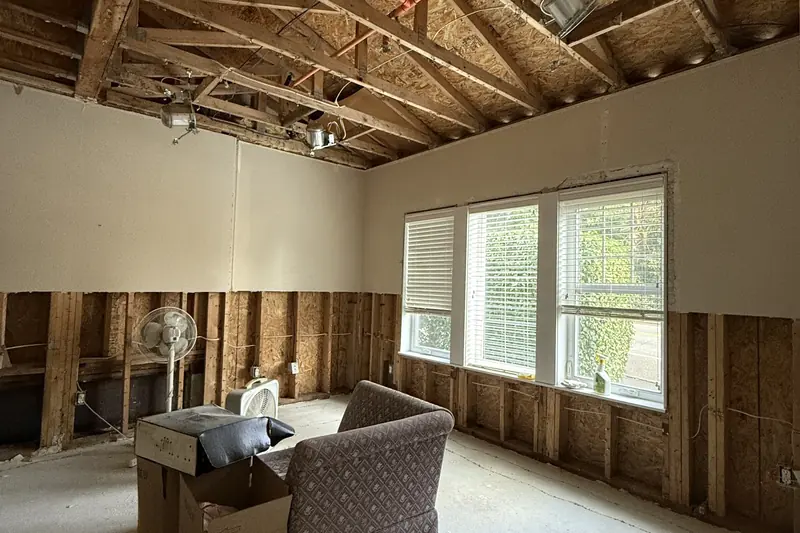
The first hours after a loss
Whatever caused the damage, protect people first and your records second.
- Stop the source if it is safe to. For a broken pipe, close the main water valve. After a sewer backup, stop flushing and running taps.
- Keep out of unsafe areas. After a fire, wait until the fire department says you can go back in. Keep at least 35 feet from a downed wire and call 911.
- Photograph before you clean. Take photos and video of every damaged room and belonging. The Insurance Commissioner says not to throw anything away until an adjuster has inspected it.
- Keep receipts for emergency materials. The Insurance Commissioner advises keeping receipts for tarps, plywood and other supplies bought to stop more damage.
- Call us. Tell us what happened and which rooms it reached.
From emergency mitigation to the finished reconstruction
On an insured loss our job is the building: stop the damage, record it, price the repair and rebuild. Decisions on the claim stay between you and your insurer.
Emergency mitigation
Standing water extracted and wet materials dried with equipment, with same day response.
Sewage backup cleanup
Contaminated water cleaned up with protective handling, and porous materials it soaked taken out.
Contents pack-out
Belongings packed and moved out of the way so rooms can be dried and repaired.
Contents Pack-Out & Cleaning Across the Greater Seattle Area
Damage documentation
We document the damage with photos and moisture readings, in one file that starts at the first visit.
A detailed estimate
A line-item estimate of the repair for your insurance company, built from what we measured and photographed.
Reconstruction
Framing, drywall, cabinets, flooring and paint, finished to match the rest of the house.
Damage from flames or wind has its own page: Fire & Smoke Damage Restoration Across the Greater Seattle Area and Storm Damage Repair Across the Greater Seattle Area. Growth found behind a wet wall is covered on Mold Remediation Across the Greater Seattle Area, and the full list is on Restoration Services Across the Greater Seattle Area.
How an insured repair moves from loss to handover
Five stages, with the record kept as the work happens rather than pieced together afterward.
-
Inspect and document
We find the source, trace how far the damage reached, and photograph each room with moisture readings before anything is moved.
-
Mitigation
Water is extracted and drying equipment runs. Porous materials soaked by sewage come out, and belongings are packed out where a room has to be cleared.
-
Scope review with your adjuster
We share our photos, readings and detailed estimate with your adjuster and answer questions on each line item.
-
Rebuild
After an asbestos survey where needed and any permits the work requires, we rebuild the damaged rooms.
-
Final walkthrough
We walk the finished rooms with you and note anything left to finish before the job closes.
What we document for your adjuster
We work with your adjuster on scope and documentation. The file we keep covers:
- Cause and source. Where the water, smoke or sewage came from, with photos of the source itself.
- Room by room photos. Each affected room before mitigation, during tear-out and after reconstruction.
- Moisture readings. Taken at marked points in walls, subfloor and framing, dated so each visit compares with the last.
- Removed materials. What was dried in place, what was cleaned, and what came out and why.
- Affected contents. Photos of damaged belongings and a list of what was packed out, made before anything is discarded.
- Estimate and supporting papers. The detailed estimate for your insurance company, plus any asbestos survey results and a note of which work needs a permit.
Coverage depends on your policy: check your policy, or ask your insurer or agent, before approving work beyond emergency steps.
Losses that end in a rebuild around Seattle
Most reconstruction jobs here trace back to one of three kinds of damage.
Pipes and side sewers
Seattle Public Utilities says pipes near open foundation vents are the most likely to freeze and split. King County says most sewage spills start in a building's private side sewer.
Fire, and the water used to fight it
The U.S. Fire Administration notes that belongings the fire never touched may be ruined by smoke or hose water, and that firefighters may cut holes in walls and roofs.
Windstorms and heavy rain
NOAA's record of the December 2006 windstorm describes rain overwhelming drainage, then thousands of trees coming down, some onto houses and rooftops.
Reconstruction once the structure is dry
Insured losses often hit the rooms a household can least do without. The rebuild usually centers on one of these.
Kitchens
A leak under the sink or a stovetop fire can take out cabinets, counters and the wall behind them. They go back in as one planned kitchen.
Bathrooms
A failed supply line or shower pan means new waterproofing, tile and fixtures, installed once the framing reads dry.
Several rooms at once
When a loss reached most of the house, reconstruction runs as a single project on one schedule.
Planning upgrades while the walls are open? Ask your insurer or agent first. The Insurance Commissioner notes you may pay the difference for work that goes beyond the home's previous condition, and that code upgrades depend on whether your policy has law and ordinance coverage.
Washington rules behind every insured repair
-
The state rule
Contractors must be registered
Under RCW 18.27, bidding or working as a contractor without registering with L&I is a gross misdemeanor. L&I's Verify tool shows a contractor's registration, workers' comp account and violations.
What we doLook us up on L&I Verify: WA license VOLCABI792C6. We are licensed, bonded and insured.
-
The state rule
Adjusters hold their own license
RCW 48.17 says only a person licensed by the Insurance Commissioner may act as an adjuster. A public adjuster is licensed and bonded, optional, hired by the policyholder, and represents the policyholder rather than the insurer.
What we doWe are the contractor, not an adjuster. We work with your adjuster on scope and documentation, and the claim itself stays between you and your insurer.
-
The Puget Sound rule
Asbestos is identified before tear-out
The Puget Sound Clean Air Agency requires materials that may contain asbestos to be identified before a renovation disturbs them, and L&I requires an accredited inspection first.
What we doIn older homes the survey is scheduled before tear-out. A certified abatement contractor handles any asbestos; we never remove it ourselves.
-
The Insurance Commissioner
You choose your contractor
Your insurer may recommend contractors, but the Insurance Commissioner says you have the right to select your own, and advises checking a company's credentials before you sign any paperwork.
What we doWe put the scope and price in writing before work starts, so you can check us and decide.
L&I Verify also confirms the licenses of electricians and plumbers, so you can check anyone who works on your house.
What Our Clients Say
I had a great time with Volcano Builders.The team was professional and on time, and the kitchen turned out just how we wanted it.
Just completed my inital meeting with Volcano Builders about my bathroom remodels and couldn't be happier with the interaction. On time, professional and extremely knowledge. Highly recommend you invite them out to see your next home improvement project!
Gad an amazing experience with Volcano Builders on my kitchen project. Bar my project manager was friendly. He make sure to keep me updated during the whole project. Also is team is very nice.
Read more of our Google reviews, word for word, with video reviews from finished homes.
Our workmanship warranty
- 2 years standard. Our installation and labor are covered for 2 years from substantial completion.
- Up to 5 years. You can extend the workmanship coverage up to 5 years for an added charge, set in your contract.
- Not transferable. Coverage stays with the homeowner who signed the contract and does not pass to a new owner.
- Materials. Materials, finish materials included, carry the manufacturer's or supplier's warranty, and we help you file a claim.
Insurance restoration questions
What affects the cost of insurance restoration work?
The size of the loss, the kind of damage and how much must be removed and rebuilt set the cost. Sewage and smoke usually mean more tear-out than clean water; hidden damage, asbestos work, permits and your finishes add to it. Who pays for what is between you and your insurer, so check your policy.
How long does reconstruction take after a loss?
Mitigation comes first and lasts until readings show the structure is dry; the EPA advises drying water-damaged areas within 24 to 48 hours. The rebuild then depends on its size, permits, any asbestos work and how quickly materials arrive. We set out the expected sequence with the written scope.
Does homeowners insurance pay for the rebuild?
It depends on your policy, so check your policy or ask your insurer or agent. Washington's Insurance Commissioner notes that flood, landslide and earthquake damage generally is not covered without a separate policy, and that code upgrades depend on law and ordinance coverage. We provide a detailed estimate for your insurance company. See OIC: Filing a homeowner insurance claim.
Can I live at home during the repairs?
Often, if the damaged area can be sealed off and a kitchen, a bathroom and power still work. If you have to move out, keep records of housing, food and laundry costs, as the Insurance Commissioner suggests, and ask your insurer or agent what your policy provides.
What if your estimate and the adjuster's scope are different?
We explain our line items to your adjuster, with the photos and readings behind each one. The decision is between you and your insurer, and questions about the claim go to your insurer or agent.
Do older homes need an asbestos survey before the rebuild?
Usually, yes, and newer homes can too. The Puget Sound Clean Air Agency says no construction date rules asbestos out. L&I names a water loss that has displaced the homeowner as a case for short-notice asbestos notification. A certified abatement contractor handles any asbestos; we never remove it ourselves.