Water Damage Restoration Across the Greater Seattle Area
Water mitigation, structural drying and the rebuild after a burst pipe, a leak or flood damage, for homes in Seattle, Bellevue and Kirkland.
- Emergency board up and tarping, standing water extracted and wet rooms dried with equipment.
- Photos, readings and a detailed estimate for your insurance company.
- One team from the first visit to the finished rebuild. Licensed, bonded and insured.
Phones staffed Monday to Friday 6am to 9pm, weekends 9am to 5pm. Same day response.
- Over 200 projects
- 4.9 on Google
- 20+ years of experience
- WA license VOLCABI792C6
What to do right now
Stop the water, stay safe, then call.
- Shut off the water at the main. Seattle Public Utilities says to close the main valve as soon as a pipe breaks. It is usually in the basement, crawl space or garage.
- Treat electricity as live. Do not touch switches or cords while standing in water. Shut power off at the panel only if the panel and the floor around it are dry and safe to reach.
- Stay out of rooms that look unsafe. Keep everyone out of a room with a sagging ceiling, and leave fallen ceiling material where it lies.
- Call us. Tell us where the water came from and which rooms it reached.
The Puget Sound Clean Air Agency notes that water damage can bring popcorn ceilings down in clumps, and those textures may contain asbestos: do not sweep or vacuum them.
Water damage repair, from extraction to structural drying
Two jobs: water mitigation, which stops the damage spreading, and the repair that puts the rooms back. We do both.
Water extraction
Standing water comes out of floors and carpet first, because damage grows the longer water sits.
Structural drying and moisture monitoring
Drying equipment runs while we take moisture readings in walls, subfloor and framing. Nothing is closed up until the readings say dry.
Burst pipe and appliance leaks
Split pipes, water heaters, washers and dishwashers. A licensed plumber fixes the line; we dry and rebuild what the water reached.
Crawl space water damage
Wet insulation, damp joists and a torn ground cover. We dry the space, replace what cannot be dried and restore the plastic ground cover.
Flood and surface water
Rising floodwater and surface water count as black water. Porous materials it soaked are removed, not dried and kept.
Tear-out and rebuild
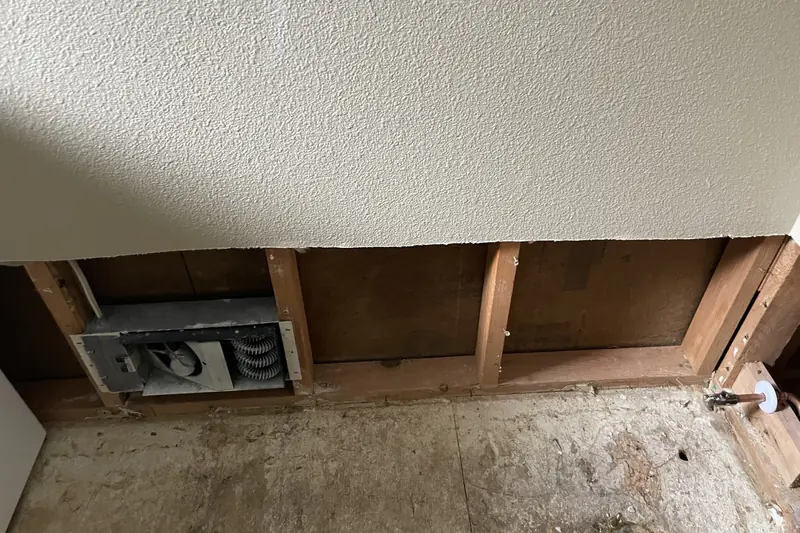
Drywall, insulation and flooring that cannot be saved come out, then we rebuild the same rooms.
Found mold behind a wet wall? That work is covered on Mold Remediation Across the Greater Seattle Area. Roof leaks after a storm are on Storm Damage Repair Across the Greater Seattle Area, and every service is listed on Restoration Services Across the Greater Seattle Area. For the rebuild paperwork, see Insurance Restoration & Reconstruction Across the Greater Seattle Area. Local pages: Water Damage Restoration in Bellevue, Water Damage Restoration in Everett, Water Damage Restoration in Renton and Water Damage Restoration in Kirkland.
How water mitigation and repair work, step by step
First the building gets dry. Everything after that is planned from the readings and photos taken along the way.
-
Inspect and find the source
We confirm the source is stopped, sort the water by type (clean, gray or black) and map how far it spread with a moisture meter.
-
Extract the water
Standing water is removed, and belongings in the way are moved or packed out so they stay dry.
-
Dry and monitor
Equipment is set up and the same spots are measured on each visit, logged with the date.
-
Tear out what cannot be saved
Materials that stayed wet or took in contaminated water are removed, after an asbestos survey where needed.
-
Rebuild the rooms
Once the framing is dry we close the walls and finish the rooms to match the rest of the house.
What we document for your adjuster
We work with your adjuster on scope and documentation. From the first visit, the file includes:
- Photos. Every affected room before, during and after tear-out.
- Moisture readings. Taken at marked points so they compare visit to visit.
- Affected materials. A list of what got wet, what was dried in place and what had to be removed.
- Drying log. Where equipment ran and the dated readings until each area was dry.
- Detailed estimate. A line-item estimate of the repair for your insurance company.
You choose your contractor: Washington's Insurance Commissioner says that right is yours.
Why water damage in Greater Seattle homes follows a pattern
Three local causes come up again and again.
Atmospheric rivers
The National Weather Service calls western Washington one of the most flood prone regions in the country. River floods follow heavy rain from atmospheric rivers, October to April, most often in November. King County sends alerts for major rivers, including the Cedar through Renton.
Freezing and split pipes
Seattle Public Utilities says pipes near open foundation vents are the most likely to freeze and split, and when one freezes, others may too.
Crawl spaces
Washington's residential code calls for a vented crawl space with a 6-mil black plastic ground cover over the soil. A leak down there is out of sight until it shows up as a musty smell or a soft floor.
Rebuilding the rooms the water reached
Water damage lands in the rooms with plumbing and the floors beneath them. The team that dried them rebuilds them.
Bathrooms
Toilet overflows, shower pan leaks and supply lines behind a vanity: tile, waterproofing and fixtures rebuilt together.
Kitchens
Dishwasher and sink leaks run under the cabinets, which often come out so the wall and subfloor can dry.
Floors
Hardwood, laminate and carpet over a wet subfloor, replaced once the subfloor reads dry.
If a flooded lower level needs more than a repair, see Basement Remodeling Across the Greater Seattle Area. If you choose upgrades during the rebuild, the Insurance Commissioner advises confirming your coverage first, because work beyond the previous condition may be yours to pay.
Asbestos and permit rules before walls come open
-
The Puget Sound rule
An asbestos survey comes before tear-out
The Puget Sound Clean Air Agency, covering King, Kitsap, Pierce and Snohomish counties (Seattle, Bellevue, Kirkland, Renton and Everett among them), requires materials that may contain asbestos to be identified before a renovation disturbs them. Condos and rentals need an AHERA certified building inspector.
What we doIn older homes we arrange the survey before cutting drywall or lifting flooring, and keep a copy on site.
-
The state rule
Age alone does not rule asbestos out
Washington L&I requires an accredited good faith inspection before any repair that could disturb suspect materials, whatever the age of the building. Asbestos that could be disturbed goes to a certified asbestos contractor.
What we doA certified abatement contractor handles any asbestos; we never remove it ourselves.
-
The Seattle rule
Finish work and structural work are treated differently
The Seattle Department of Construction and Inspections usually needs no permit for surface finishes or limited in-kind repair. Work on load-bearing supports or the building envelope needs a permit no matter how small.
What we doBefore the rebuild we tell you in writing which parts need a permit, such as replaced joists or framing.
Plumbing permits in Seattle come from Public Health Seattle & King County; Bellevue, Kirkland and Renton issue their own.
What Our Clients Say
Had a great experience working with Volcano Builders on remodeling bathroom and flooring in my condo! Bar and his team were very professional from estimates to timely completion of the job! Highly recommend!
Bar and the team at Volcano Builders did a great job! Professional service, great communication throughout the whole process, and everything was done with care and attention to detail. Highly recommend!
We were nervous about hiring a contractor because we were first-time homeowners, but Volcano Builders made it easy to understand. They made everything clear and helped us stick to our budget. I'm very happy with how everything turned out.
Read more of our Google reviews, word for word, with video reviews from finished homes.
Our workmanship warranty
- 2 years standard. Our installation and labor are covered for 2 years from substantial completion.
- Up to 5 years. You can extend the workmanship coverage up to 5 years for an added charge, set in your contract.
- Not transferable. Coverage stays with the homeowner who signed the contract and does not pass to a new owner.
- Materials. Materials, finish materials included, carry the manufacturer's or supplier's warranty, and we help you file a claim.
Water damage questions
What affects the cost of water damage restoration in the Greater Seattle area?
Four things drive it: how far the water spread, what kind of water it was, how long materials stayed wet, and what has to be rebuilt. Clean water dried quickly may need little tear-out; floodwater or a slow hidden leak means more. Asbestos work and the finishes you choose add to the scope. We price it in writing after the inspection.
How long does structural drying take?
It depends on the materials, how long they were wet and how far the water reached. The EPA notes that finishes such as vinyl wallpaper or wood paneling can trap moisture underneath. We stop when the readings show dry, not on a fixed schedule.
Does homeowners insurance cover water damage?
It depends on your policy, so check your policy or ask your insurer or agent. Washington's Insurance Commissioner treats flooding from a nearby river or waterway differently from a leak or water intrusion inside the home, and tells homeowners with flood damage to contact their flood insurer too. We document the damage with photos and moisture readings and provide a detailed estimate for your insurance company. See OIC: Filing a homeowner insurance claim.
Can I stay home while the house dries?
Often, yes, when the wet area can be closed off and a bathroom, the kitchen and power still work. Floodwater in living areas or asbestos work can make the house unlivable for a while. If so, the Insurance Commissioner suggests tracking housing, food and laundry costs; ask your insurer or agent what your policy includes.
Will mold grow after water damage?
It can, which is why speed matters. The EPA says to dry water-damaged areas and items within 24 to 48 hours to prevent mold growth. Materials that stayed wet longer are checked and removed if needed. See Mold Remediation Across the Greater Seattle Area.
Do older homes need an asbestos test before water damage repair?
Usually, yes. The Puget Sound Clean Air Agency and Washington L&I require suspect materials to be surveyed by an accredited inspector, or treated as asbestos, before work disturbs them, whatever the building's age. Popcorn ceilings, some vinyl flooring and pipe insulation are common suspects. A certified abatement contractor handles any asbestos; we never remove it ourselves.