
Kitchen remodeling, Greater Seattle Area
6 Tips on Choosing Appliances for Your Kitchen Renovation
Choosing appliances for a kitchen renovation is six decisions made before the cabinets are ordered: the size of each opening, the fuel and power each appliance needs, the hood and its vent, stainless or panel-ready fronts, energy use and the budget. Appliance purchase and installation sit outside our kitchen starting prices.
Cabinets are built around the appliances, so the models come first. To plan yours with our designer, Book a Consultation.
How do you measure for new kitchen appliances?
Measure the opening and the path. For each appliance, write down the width, height and depth of the space it goes into, then the doorways, halls and stair turns it has to pass on delivery day. A refrigerator that fits the opening can still stall at a narrow back door.
Most ranges and cooktops are 30 to 36 inches wide. ENERGY STAR says most cooking tops fall within 30 to 36 inches in width, as slide-in ranges, freestanding ranges or cooktops set into the counter (ENERGY STAR, Electric Cooking Products, read October 2026).
Size also changes energy use. On its Refrigerators page (read October 2026), ENERGY STAR says the larger the refrigerator, the greater the energy consumption, and asks for a few inches between the wall and the refrigerator. Clearances for door swings and landing space are in Kitchen Remodel Mistakes: Dos and Don'ts.
Should you buy kitchen appliances before ordering the cabinets?
Before the cabinet order. Cabinet boxes, filler strips and the counter cutout for a cooktop are all sized to the appliance models, so a model change after the order means new cabinets or a recut counter. Our Kitchen Remodeling Across the Greater Seattle Area page says to choose every finish before the build starts, because a change after cabinets or counters are ordered costs both money and weeks.
Lead time matters most with custom work. Our kitchen pricing guide says custom and inset cabinets add 8 to 12 weeks of lead time. Order the appliances early enough to have the spec sheets and installation manuals in hand when the cabinet drawings are finished.
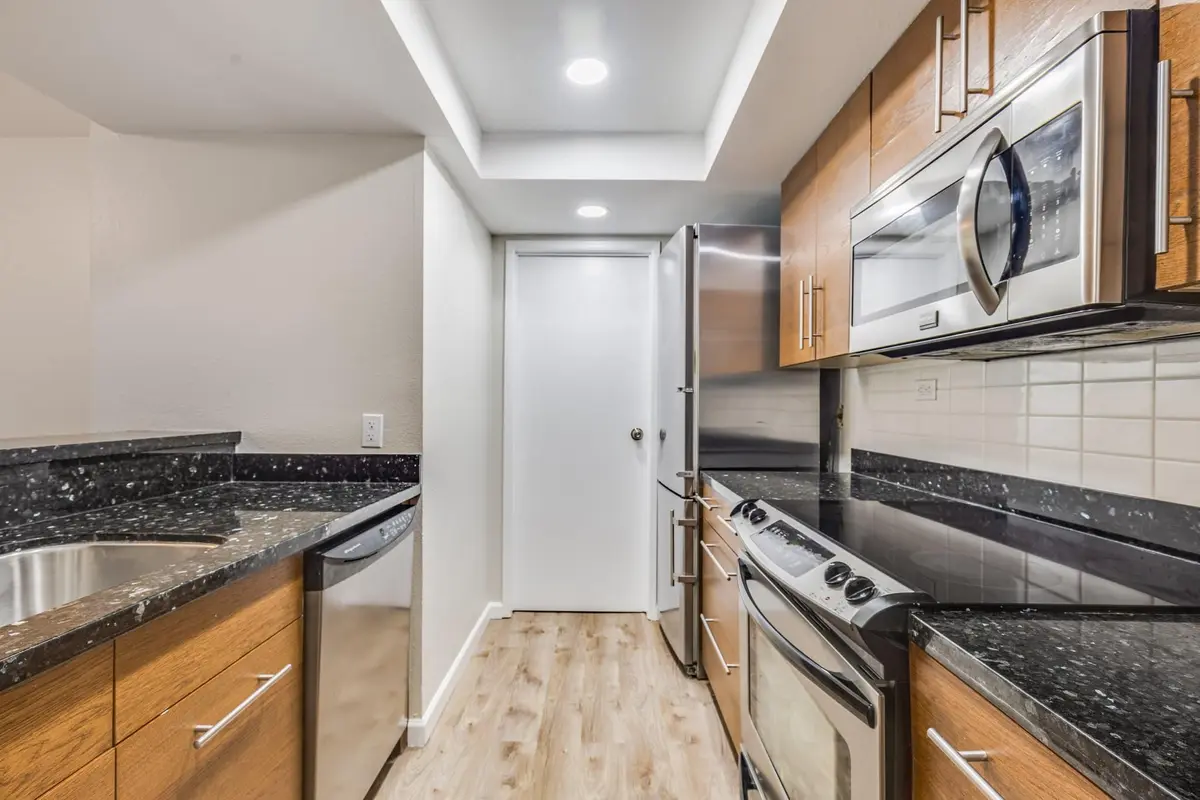
Not every remodel needs new appliances. Our condo kitchen refresh in Renton in 2024 kept the cabinets and granite, added a new plank floor, paint and electrical work, and the appliances went back into their places on the new floor.
Gas, electric or induction: what power does each appliance need?
Decide the fuel early, because it sets the work behind the walls. ENERGY STAR says induction transfers about 85% of the heating energy to what is in the pan, compared with only a third for gas cooking, and that certified electric cooking products are 18% more efficient on average than standard models (ENERGY STAR, Electric Cooking Products, read October 2026).
Switching fuels has a cost. Our pricing guide notes that induction cooktops, pro ranges and more circuits can need a larger electrical panel. Moving a range or a gas line means new gas, supply and venting runs through floors and walls, which our Mid-Range level and up include.
Moving an appliance can need a permit. The City of Bellevue's Work Requiring Permits page (read October 2026) says: "A permit is required to move an appliance if it will require installing or modifying gas lines, water lines, drains, vents or electrical circuits. We do not require a permit for replacing an appliance with a similar appliance in the same location." In Seattle, gas piping permits come from Public Health, Seattle and King County. City by city, see Do You Need a Permit to Remodel a Kitchen?
What range hood or ventilation does a new kitchen need?
A fan that exhausts outdoors. The EPA says: "Local bathroom or kitchen fans that exhaust outdoors remove contaminants directly from the room where the fan is located and also increase the outdoor air ventilation rate." (EPA, Improving Indoor Air Quality, updated August 3, 2026.)
Choose the hood at the same time as the range. A wall chimney hood, an insert hidden in a cabinet and an over-range microwave each sit differently in the cabinets above the range. One that exhausts outdoors needs a duct route through the wall or roof, fixed before the upper cabinets go up, so it belongs in the first drawings. We prepare the venting connection as part of the kitchen; the hood itself is an appliance you buy.
Should you choose built-in, panel-ready or stainless appliances?
Stainless is the simpler path. A built-in appliance is set into the cabinet run, so its cabinet box is drawn to the model's spec sheet. A panel-ready refrigerator or dishwasher takes a door panel made to match the cabinets, so the panels join the cabinet order and the cabinetmaker needs the appliance's panel specifications before building. In our kitchen pricing guide, panel-ready appliance prep is listed in the Large kitchen Luxury level, which starts at $225,000+.
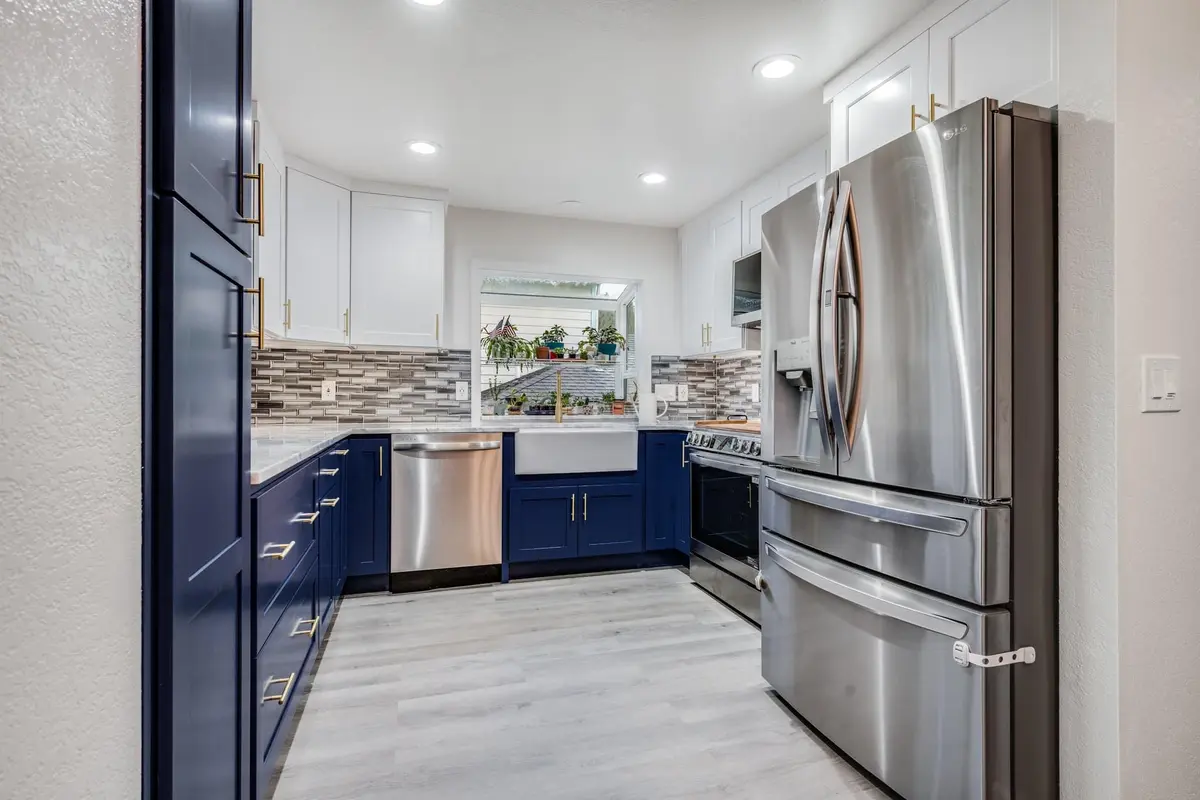
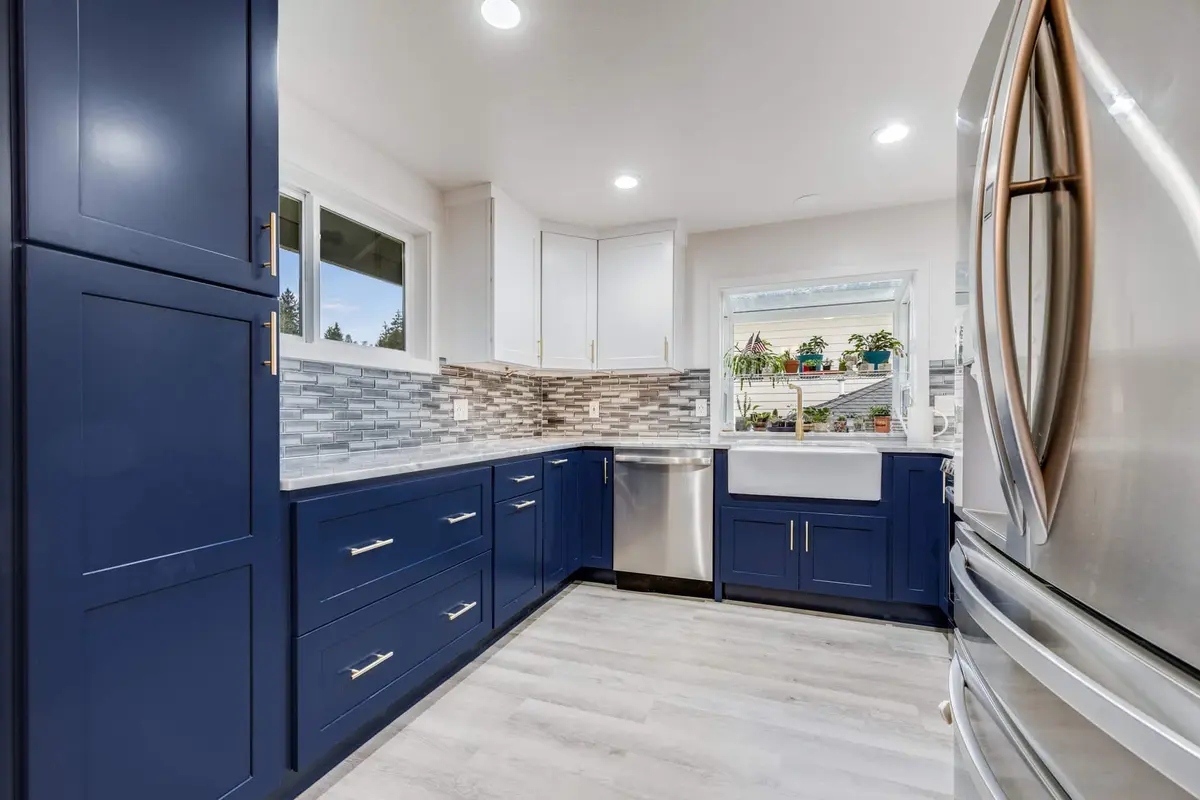
Our Lynnwood kitchen went the other way. It was completed in early 2024 for about $50,000 with stainless appliances against navy shaker base cabinets and white wall cabinets, in the same L-shaped footprint as the old kitchen.
How do you choose energy-efficient appliances for a kitchen remodel?
Look for the ENERGY STAR label, then compare the yellow EnergyGuide labels. ENERGY STAR says the EnergyGuide label shows a model's energy use and lets you estimate annual operating costs (ENERGY STAR, Dishwashers, read October 2026). The table gives ENERGY STAR's own figures for three kitchen appliances.
| Appliance | ENERGY STAR figure | What to look for |
|---|---|---|
| Refrigerator | About 9 percent more energy efficient than the federal minimum standard | Top freezer models tend to use the least energy; keep it away from the oven, the dishwasher and direct sun |
| Dishwasher | Saves about 5,800 gallons of water over its lifetime (standard size) | Standard models hold more than eight place settings; compact models may use more energy over time |
| Electric range or cooktop | 18% more efficient on average than standard models | Induction sends about 85% of the heat to the pan |
Source: ENERGY STAR Refrigerators, Dishwashers and Electric Cooking Products, read October 2026.
Are appliances included in the price of a kitchen remodel?
No. Our kitchen pricing guide says appliance purchase and installation are not included in any level. We prepare the electrical, plumbing, gas and venting connections, so your appliances are ready to install. Budget for the range, refrigerator, dishwasher and hood on top of the kitchen price.
| Kitchen | Starting at | Typical time on site |
|---|---|---|
| Refresh, cabinets and layout stay | $35,000+ | 2 to 5 weeks |
| Small or galley kitchen | $60,000+ | 6 to 10 weeks |
| Medium kitchen | $85,000+ | 8 to 12 weeks |
| Large or open kitchen | $120,000+ | 10 to 16 weeks |
Source: Cost of a Kitchen Remodel in the Greater Seattle Area, updated October 2026. Appliances and permit fees are not included. Times are the guide's typical ranges, after design and permits.
How do we plan appliances in a kitchen remodel?
We visit your home, measure the kitchen and ask which appliances you have chosen or are keeping. Our designer lays the cabinets out around those models and shows you the kitchen in 3D. We price it in writing line by line and file the permits the scope needs. The price covers preparing the electrical, plumbing, gas and venting connections for your appliances. One project manager then runs the build.
For every other step of the project, from budget to final walk, use the Kitchen Remodel Checklist: 9 Steps in Order. For remodeling north of Seattle, see Home Remodeling Contractors in Lynnwood, WA.
Frequently Asked Questions
Will my pots and pans work on an induction cooktop?
Test them with a magnet. ENERGY STAR says that if a magnet sticks to the cookware, it will work with induction, and that cast iron, stainless steel and enameled cast iron are often compatible (ENERGY STAR, Electric Cooking Products, read October 2026).
What size refrigerator uses the least energy?
ENERGY STAR says the most energy-efficient models are typically 16 to 20 cubic feet (ENERGY STAR, Refrigerators, read October 2026).
How much does the oven in a range hold?
ENERGY STAR says most ovens included in electric ranges have a capacity of 5 to 6 cubic feet (ENERGY STAR, Electric Cooking Products, read October 2026). Check the capacity on the spec sheet if you bake large trays or roast often.