Kitchen remodeling, Greater Seattle Area
Kitchen Remodel Mistakes: Dos and Don'ts
The biggest kitchen remodeling mistakes are moving plumbing or walls without a reason, crowding the range or refrigerator against a wall, and changing selections after cabinets are ordered. The main dos are planning the sink, range and refrigerator as one work triangle, giving each a landing counter, lighting every work surface and venting the range outside.
Each rule below comes with its source and a kitchen we built that follows it. To have your kitchen planned this way, Book a Consultation.
What should you not do in a kitchen remodel?
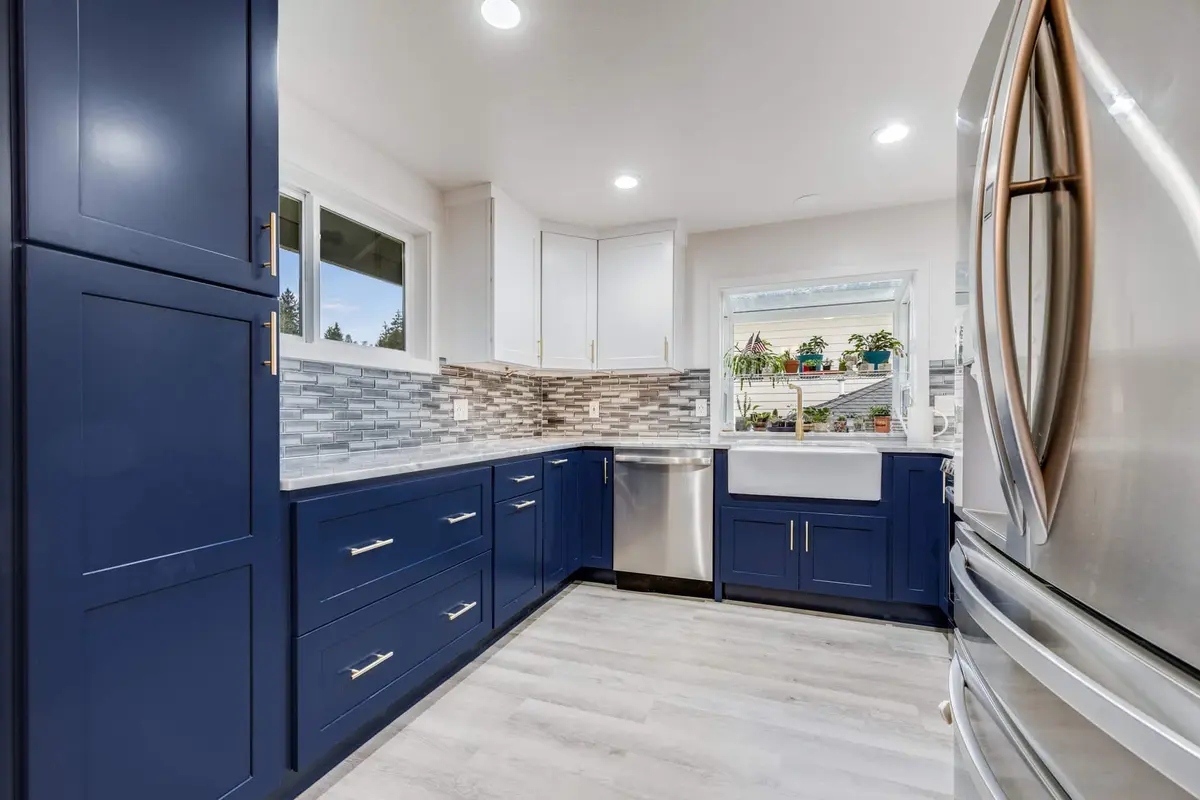
The main dos are layout measurements from the National Kitchen & Bath Association; the main don'ts are cost and timing mistakes from our own pricing guide. NKBA publishes the measurements in its Kitchen Planning Guidelines (NKBA Kitchen Planning Guidelines with Access Standards, based on the 2015 IRC, file posted 2022), and designers use them to check a plan before anything is ordered. The rest are decisions about cost and order of work, taken from our own pricing guide. Start with how your household uses the room: who cooks, how often, where people sit and what needs storing.
| Topic | Do | Don't | Source |
|---|---|---|---|
| Work triangle | Keep sink, range and refrigerator 4 to 9 feet apart, 26 feet or less in total | Run the main walkway through the triangle | NKBA guidelines |
| Aisles | Leave 42 inches for one cook, 48 inches for two | Squeeze an island into a narrow room | NKBA guidelines |
| Range | Leave 12 inches of counter on one side and 15 on the other | Set the range tight against a wall or tall cabinet | NKBA guidelines |
| Refrigerator | Leave 15 inches of counter on the handle side | Let its door hit another appliance door | NKBA guidelines |
| Sink and dishwasher | Keep the dishwasher within 36 inches of the sink | Leave the sink without landing counter | NKBA guidelines |
| Trash | Plan two bins: one near the sink, one for recycling | Leave trash in a loose can across the room | NKBA guidelines |
| Ventilation | Duct the range hood outside, 150 cfm or more | Pick a hood without checking its rated cfm | NKBA guidelines |
| Lighting | Put task light on every work surface | Light the room from the ceiling center only | NKBA guidelines |
| Budget | Keep the sink and range where they are when you can | Move them without a reason | Our pricing guide |
| Order of work | Finalize every selection before demolition | Change a choice after cabinets or counters are ordered | Our pricing guide |
Sources: NKBA Kitchen Planning Guidelines with Access Standards (posted 2022, read October 2026); our kitchen pricing guide, updated October 2026.
How do you plan a kitchen layout around the work triangle?
The work triangle joins the three busiest spots in a kitchen: the sink, the cooking surface and the refrigerator. NKBA recommends that the three legs add up to no more than 26 feet, with no leg shorter than 4 feet or longer than 9 feet, measured from the center front of each appliance (NKBA Kitchen Planning Guidelines, posted 2022). If your plan does not form a triangle, moving one appliance often fixes the flow.
Three more NKBA rules keep the triangle working. No main traffic path should cross it. An island or peninsula should not cut into any leg by more than 12 inches. A tall pantry cabinet, tall oven cabinet or refrigerator should not stand between two of the work centers.
An island needs room around it. NKBA calls for a work aisle of at least 42 inches for one cook and 48 inches for two, measured between counters, tall cabinets or appliances, and a walkway of at least 36 inches. If the room cannot give that, a peninsula or a longer run of counter usually works better than a cramped island.
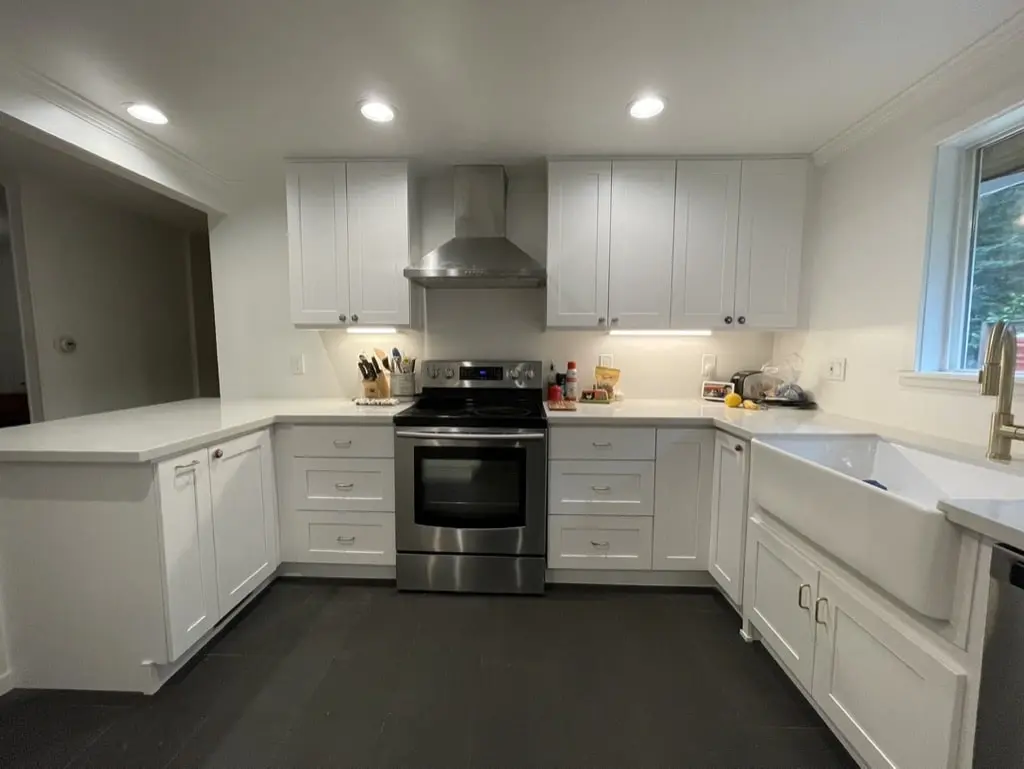
A layout does not have to change to work. Our Lynnwood kitchen kept its L-shaped footprint and gained storage in every corner. In Snohomish, the sink run forms an L under the window and the refrigerator sits on its own wall.
How much counter space should the range, sink and refrigerator have?
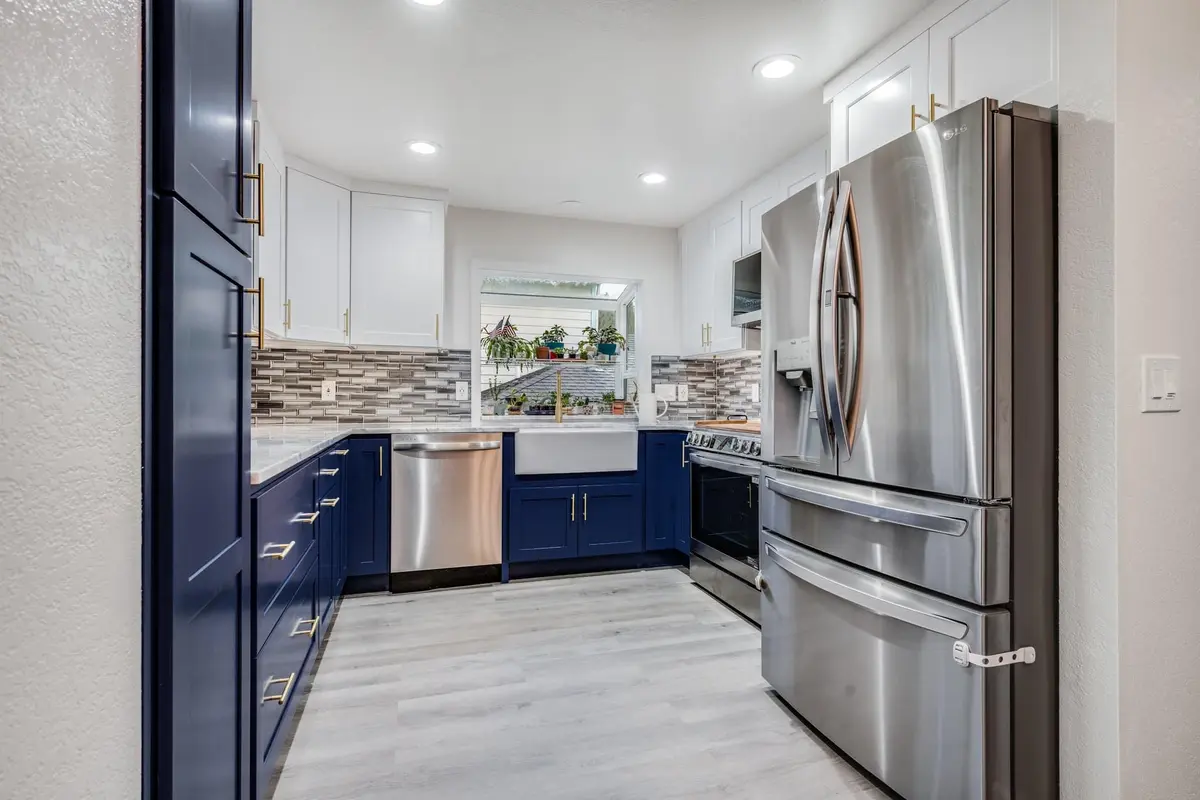
Every appliance needs a landing spot, a stretch of counter where you set things down. NKBA recommends at least 12 inches of counter on one side of the cooking surface and 15 inches on the other, 15 inches on the handle side of the refrigerator, and 24 inches on one side of the sink with 18 inches on the other (NKBA Kitchen Planning Guidelines, posted 2022).
That is why a range pushed against a wall or a tall cabinet is a common mistake: you lose the counter you need for a hot pan. A base cabinet with counter on each side of the range gives NKBA's 12 and 15 inches.
The refrigerator needs room for its door too. NKBA says no appliance door should interfere with another, so check that the refrigerator, oven and dishwasher doors can all open at once. The appliance's installation instructions give the clearance it needs at the wall.
Plan the main prep area next to the sink: NKBA suggests a continuous counter at least 36 inches wide and 24 inches deep there, and the dishwasher within 36 inches of the sink.
Where should the trash, recycling and storage go in a kitchen?
Put the trash next to the sink, where scraps come out. NKBA recommends at least two waste bins: one near the cleanup sink and a second for recycling, in the kitchen or nearby (NKBA Kitchen Planning Guidelines, posted 2022). A pullout cabinet keeps both out of sight.
Corners waste the most room. NKBA recommends a storage device in at least one corner cabinet. In our Lynnwood kitchen, a lazy susan fills the corner, a pull-out spice rack and a recycling pull-out sit beside the range, and a full-height navy pantry holds the dry goods.
Open shelves trade closed storage for display. Our Shoreline kitchen started with food and dishes on open shelves and a rolling cart. The remodel put cabinets on every wall.
How should you light a kitchen and vent the range?
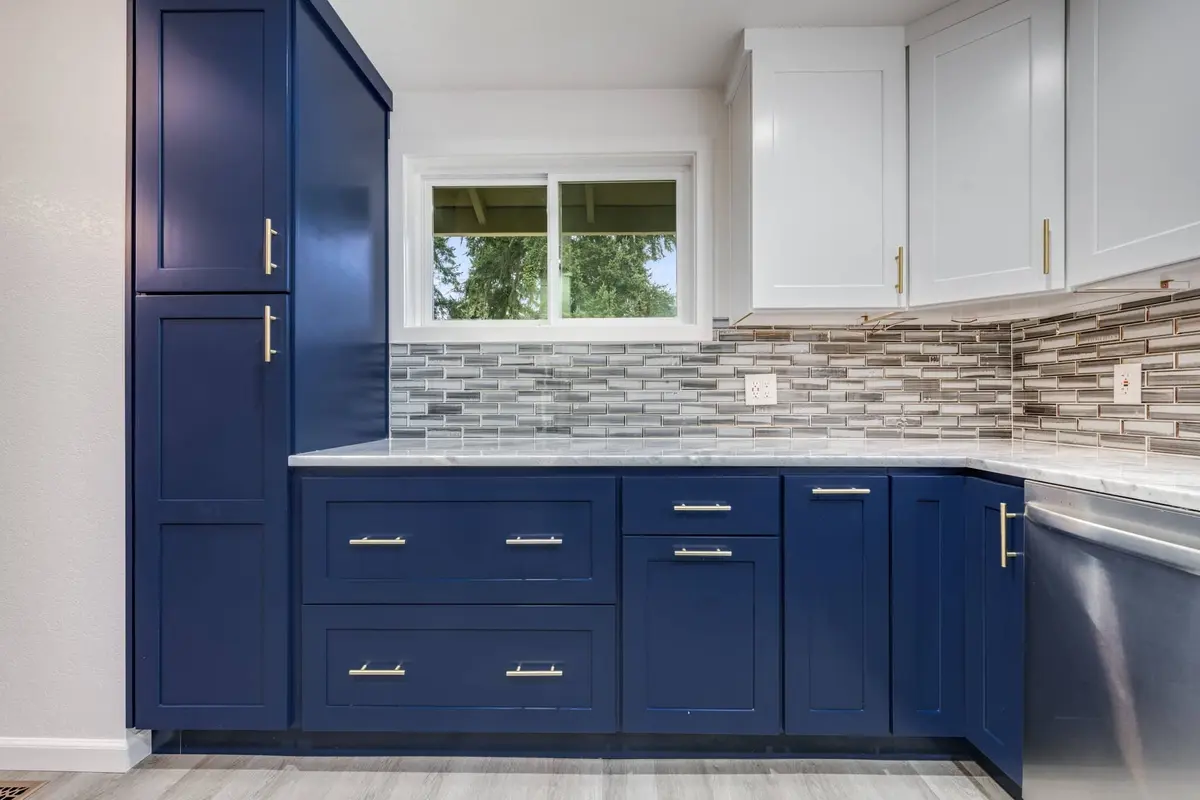
Light each work surface as well as the room. NKBA Guideline 31 asks for task lighting on every work surface on top of the general light, and its Access Standard adds that lighting should come from multiple sources and be adjustable (NKBA Kitchen Planning Guidelines, posted 2022). A single ceiling fixture behind you puts your own shadow on the counter. Lights under the wall cabinets and recessed lights over the counter edge put the light in front of you.
Our published kitchen prices include recessed and under cabinet lighting from the Basic level. The Refresh Luxury level adds a lighting plan with dimmers.
For the range, NKBA recommends a ducted hood vented to the outside, with a minimum of 150 cubic feet per minute (cfm). Check the rated cfm on the spec sheet before you choose between a chimney hood and an over the range microwave. Our Shoreline kitchen has a stainless chimney hood over the range.
Which kitchen remodeling choices raise the cost most?
Layout changes are one of the three things that set a kitchen's price in our pricing guide. A medium kitchen in the same layout starts at $85,000+. Our Mid-Range level adds cabinet layout changes and a peninsula or island and starts at $110,000+. Moving the sink, range or gas line is not part of our Basic level, because new drain, supply, gas and venting runs mean opening floors and walls. A load-bearing wall needs a beam, engineering and a building permit. Custom cabinets add 8 to 12 weeks of lead time.
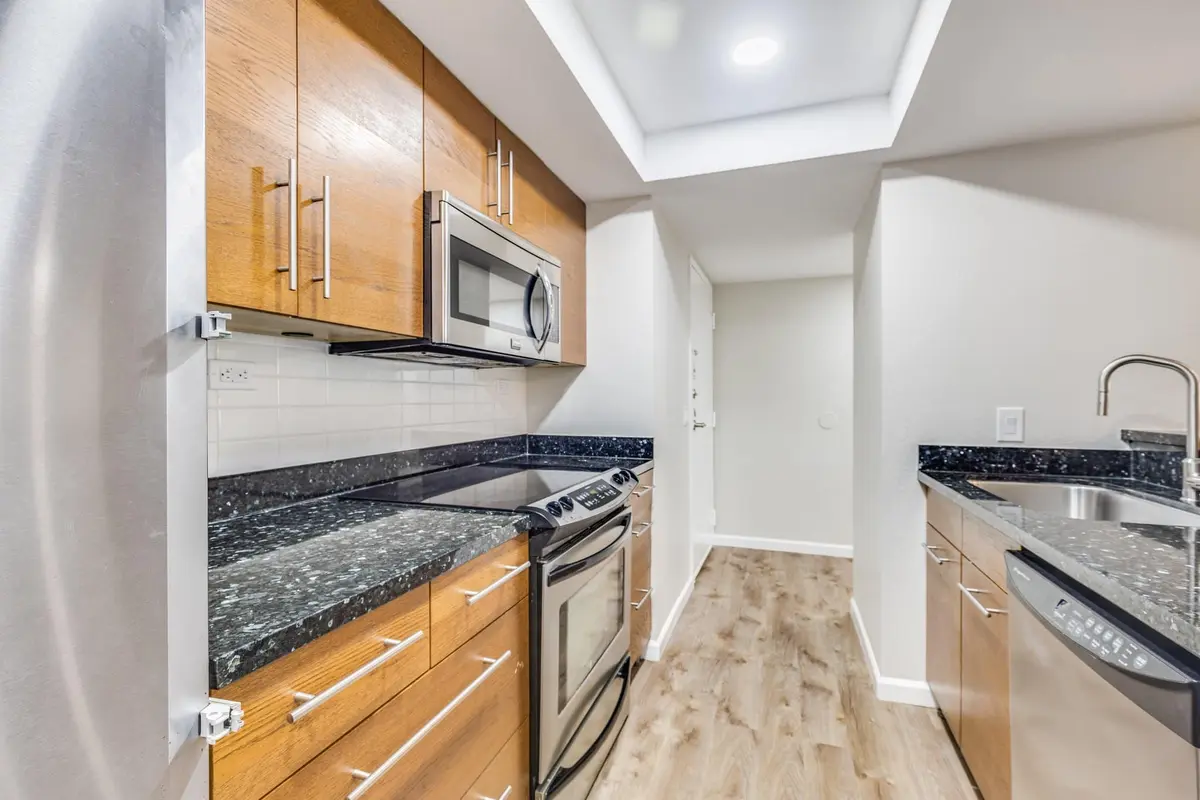
Scope added during the build adds cost too. Our Shoreline kitchen added a beam and a repipe of the water lines by change order once work was under way. It cost about $70,000 in 2022. Our Renton condo kitchen kept its sound cabinets, granite and backsplash and put the money into a new plank floor, paint and electrical work. It cost about $35,000 in 2024.
The full price table is on Cost of a Kitchen Remodel in the Greater Seattle Area.
| Kitchen and scope | Starting at, or project price |
|---|---|
| Refresh: cabinet boxes and layout stay | $35,000+ |
| Small kitchen, same layout, everything new | $60,000+ |
| Medium kitchen, same layout, everything new | $85,000+ |
| Medium kitchen with cabinet layout changes (Mid-Range) | $110,000+ |
| Large or open kitchen | $120,000+ |
| Renton condo refresh, 2024 | About $35,000 |
| Shoreline kitchen with a beam and repipe, 2022 | About $70,000 |
Starting prices from our kitchen pricing guide, updated October 2026; they include a standard material allowance and exclude appliances and permit fees. Project prices are from each project page, in the year the kitchen was completed; costs have risen since.
What should be decided before kitchen demolition starts?
Settle the design and every selection first. A change after cabinets or counters are ordered costs both money and weeks. Our designer lays out the kitchen with you and shows it in 3D before you approve it, and counters are measured after the cabinets are set, so they fit the boxes actually installed. On our Burien kitchen and laundry, the drawings were approved before demolition and construction took about 10 weeks, April 11 to June 22, 2022. For a whole house, see How to Plan a Major Home Renovation.
Know which permits your scope needs. New cabinets over existing walls need no Seattle building permit. Moving a load-bearing wall needs one, and moving a pipe or a circuit needs its own plumbing or electrical permit. Seattle plumbing and gas permits come from Public Health, Seattle and King County. Our guide Do you need a permit to remodel in Seattle? covers the rules.
Plan for living without the kitchen. Set up a temporary kitchen in another room with the refrigerator, a microwave and a small counter, and agree the crew's working hours and path through the house before the build. See Kitchen Remodeling Across the Greater Seattle Area for how we run a kitchen build. Homeowners north of Seattle can start at Home Remodeling Contractors in Lynnwood, WA.
Frequently Asked Questions
How long does a kitchen remodel take?
On site, after design and permits, a refresh takes 2 to 5 weeks, a small kitchen 6 to 10 weeks, a medium kitchen 8 to 12 weeks and a large kitchen 10 to 16 weeks, per our pricing guide. Our Snohomish kitchen took about three weeks from the day the old cabinets came out.
Are appliances included in a kitchen remodel price?
Not in our prices. Appliance purchase and installation are outside every level. We prepare the electrical, plumbing, gas and venting connections, so the appliances you choose are ready to install.
Can a washer and dryer go inside the kitchen?
Yes, when the plumbing, drain and dryer vent can reach the spot. In our Shoreline kitchen the washer and dryer sit side by side in a nook at the end of the sink run, with cabinets above them.
What warranty comes with a kitchen remodel?
Every kitchen we build carries a 2-year workmanship warranty, extendable to 5 years. Materials carry their manufacturer's warranty.