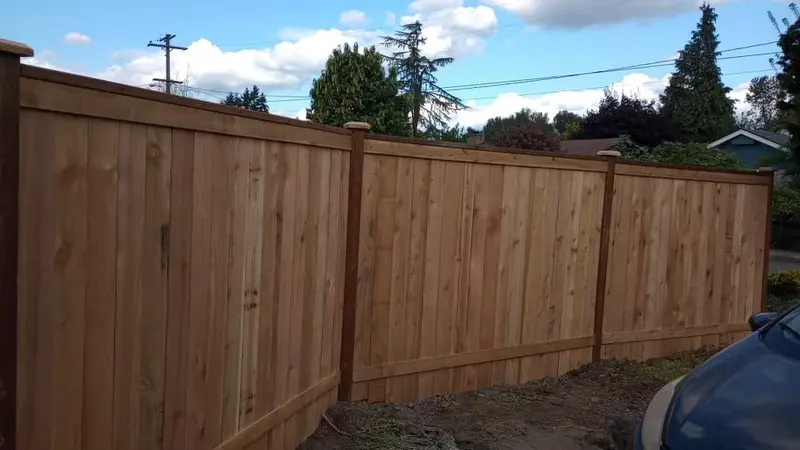
Wood Privacy Fence Around a Backyard
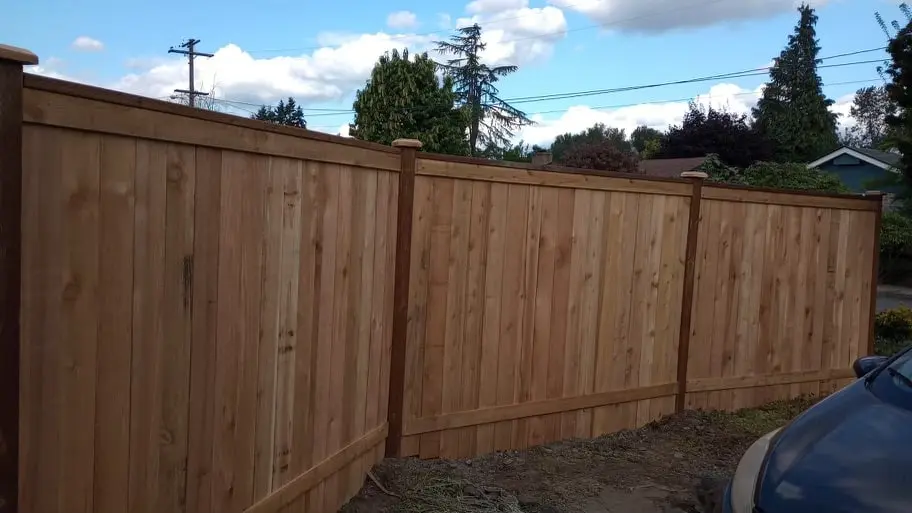
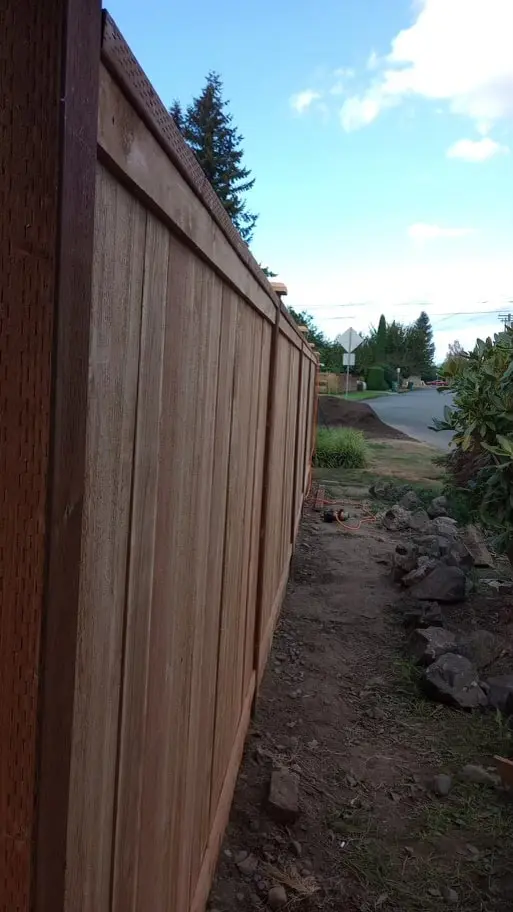
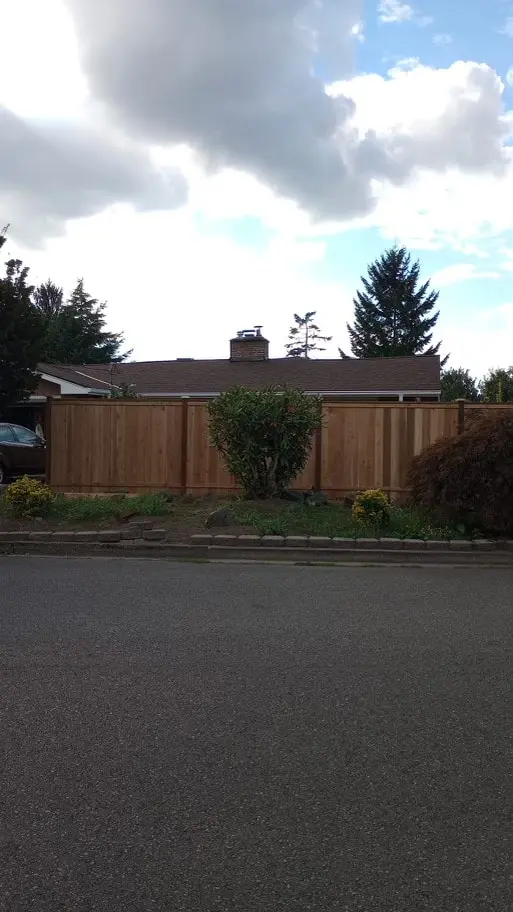
This backyard is now closed in by a tall wood privacy fence that runs along the side and back lot lines and wraps around a brick paver patio. The fence is built in framed panels of vertical boards between darker posts, with a top cap along its full length, so it looks finished from the yard and from the neighbors' side.
- Service
- Fence installation
- Scope
- Privacy fence along the side and back lot lines and around a paver patio
- Style
- Framed panels of vertical boards, darker posts, continuous top cap
- Contractor
- Volcano Builders, WA license VOLCABI792C6
- Approximate investment
- About $15,000
Every project is priced in writing, line by line, for your home.
The finished fence
Know someone planning a project like this? Refer them: you get $500 cash or $1,500 credit, they get $500 off.
How this backyard privacy fence came together
The goal
The yard needed privacy on its side and back lot lines and a proper enclosure around the brick paver patio, with a fence tall enough to screen the neighboring houses and finished well enough to look good from both sides.
The challenge
The fence had to follow long lot lines across open lawn, turn clean corners, and wrap around an existing paver patio and garden beds without disturbing them. Work also had to go on around a patio cover, while keeping every run straight and every panel the same height.
The solution
We worked one line at a time: the back fence went up first, then the panels along the side lot line, and a separate run that starts beside the patio cover. On each line the posts went in first, and the framed panels followed, built from vertical boards held in a frame between the darker posts. A continuous top cap runs over the panels and posts, which ties the whole fence together visually and covers the end grain of the boards. At the patio, the fence runs tight beside the pavers, and at the garden beds it stands behind the planting.
The result
The backyard is now closed in on its side and back lines by one consistent fence. The fence has long, straight runs, square corners and the same framed panel style everywhere, with the darker posts and cap giving it a clean outline. The patio feels private, and the neighboring roofs are mostly out of view.
Related pages
- Fence Installation Across the Greater Seattle AreaOur fence service: wood privacy fences, gates and repairs.
- Remodeling Pricing Guide for the Greater Seattle AreaWhat drives the price of a remodeling project.
- Side Yard Wood Fence and GateA tall side yard gate and fence built with a new concrete walk.
- Backyard Cedar Privacy FenceAnother backyard fence from our fence portfolio.
- Horizontal Cedar Fence on a Rock WallA natural wood fence project from our fence portfolio.
Questions about this project
What does a top cap add to a wood privacy fence?
A cap board runs along the top of the panels and posts. On this fence it gives every run the same clean top line, ties the panels and posts together visually and covers the end grain at the top of the boards.
Can a new fence go around an existing paver patio?
Yes. Here the fence was run tight beside the brick paver patio and behind the garden beds, so the patio stayed as it was and is now fully closed in. Planning the post spacing around the patio edge first is what lets the panels land evenly without cutting into the pavers.
How much did this project cost?
About $15,000. Every project is priced in writing, line by line, for your home.
How do I get a price for a wood privacy fence?
Book a consultation. We walk the lot lines, count the corners and gates and send a written, itemized price before work starts. For what moves the price, read Remodeling Pricing Guide for the Greater Seattle Area.
Before you book
- Remodeling Reviews in Seattle and Bellevue, WAWhat homeowners say about working with us, in their own words.
- Home Renovation Financing in SeattleHow remodeling financing works, and the application.
- Remodeling Warranty in Seattle and Bellevue, WAOur 2-year workmanship warranty and how to make a claim.
- Referral Program: You Get $500 Cash or $1,500 Credit, They Get $500 OffRefer a friend who is planning a remodel and choose your reward.